More monument plaster restoration


Day three:

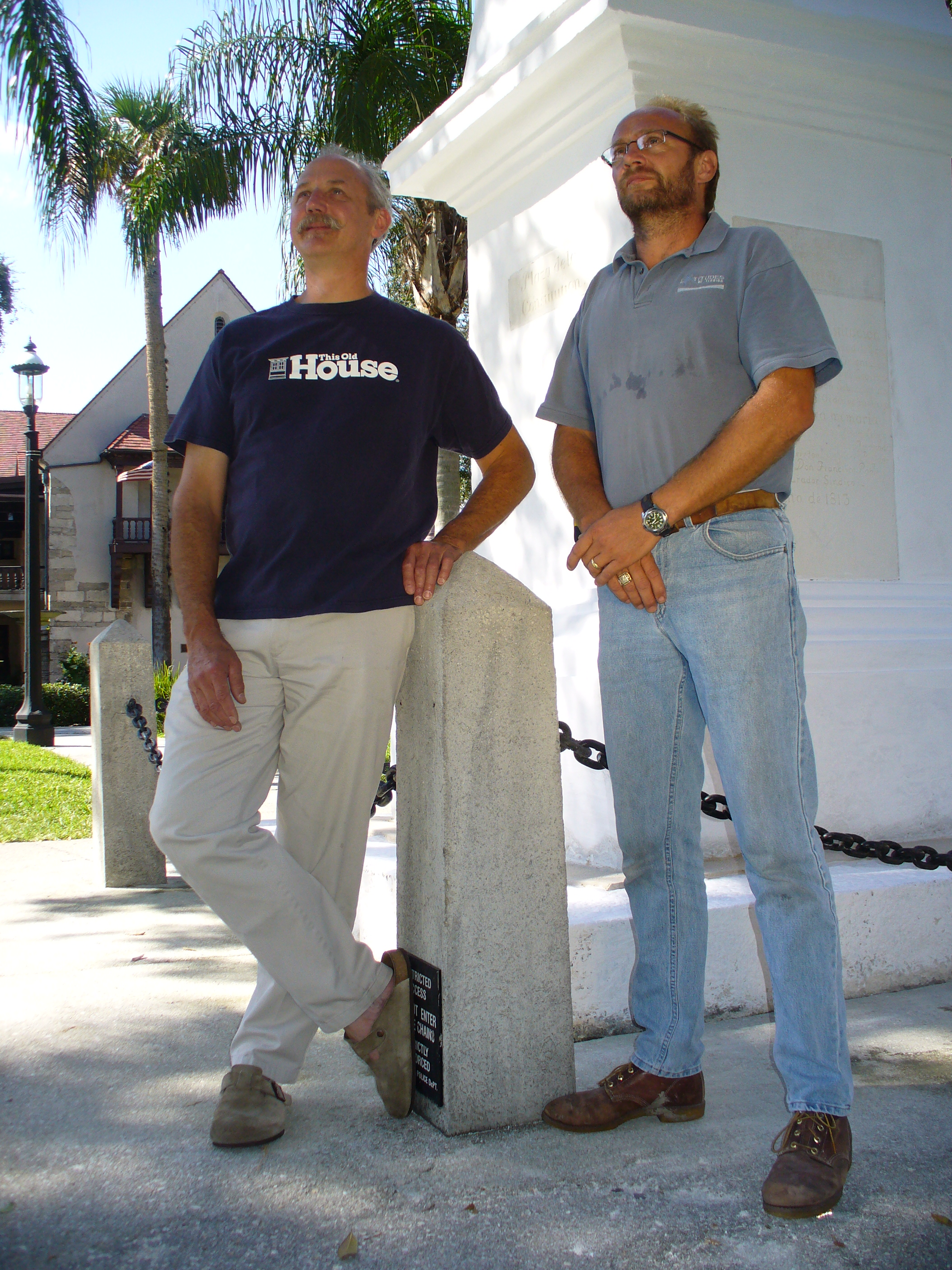
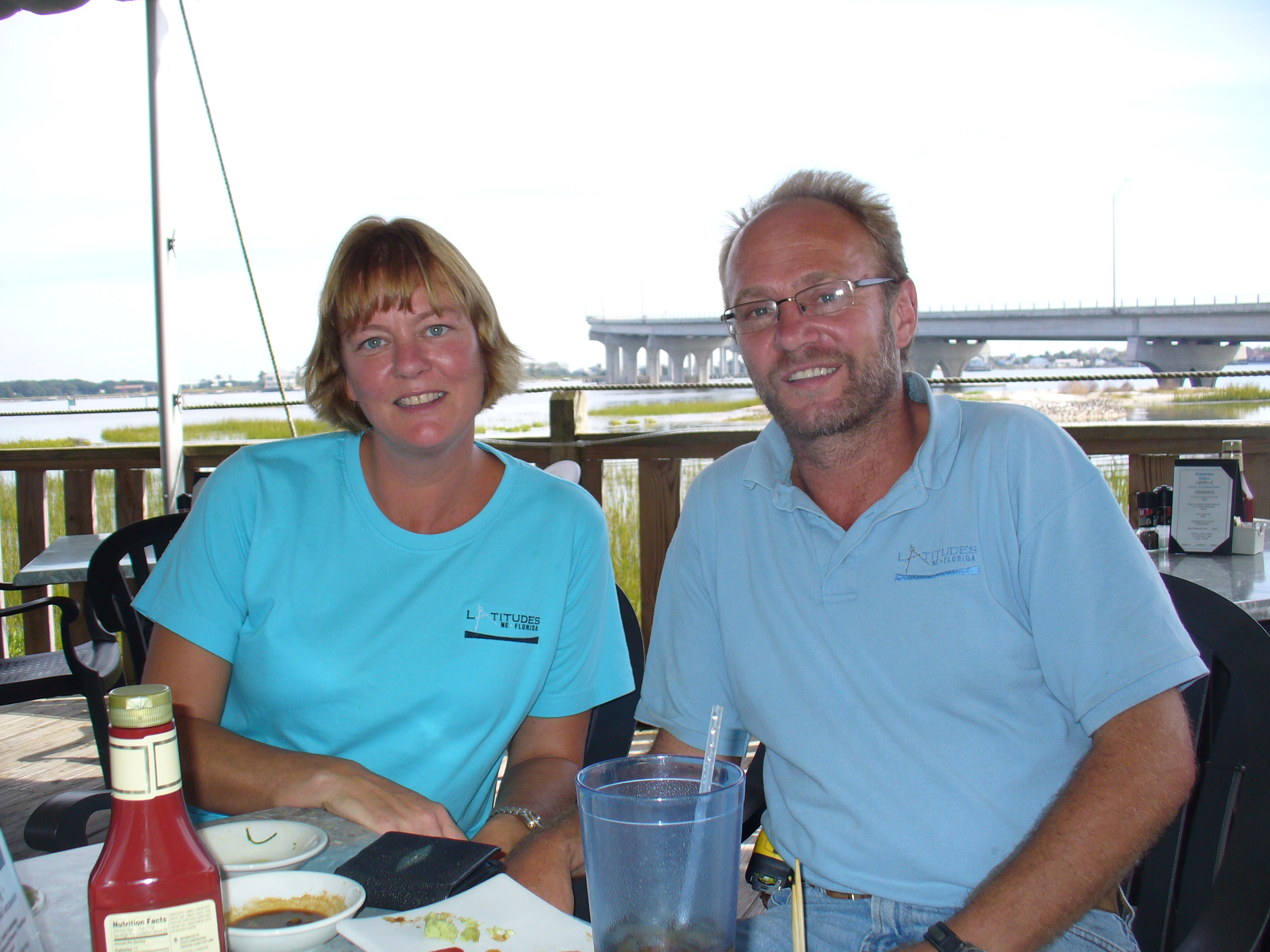
Before I go any further I would like to introduce my hosts, co-workers, and restoration general contractors from St. Augustine.

Coenraad and Elizabeth Van Rensburg’s company is Latitudes NE Florida, Ltd. Co. in St. Augustine, Florida. They can be reached at 904-819-0801. They along with their crews do great work and I recommend them to anyone in the St. Augustine area that needs a dependable contractor, and a company that understands restoration.

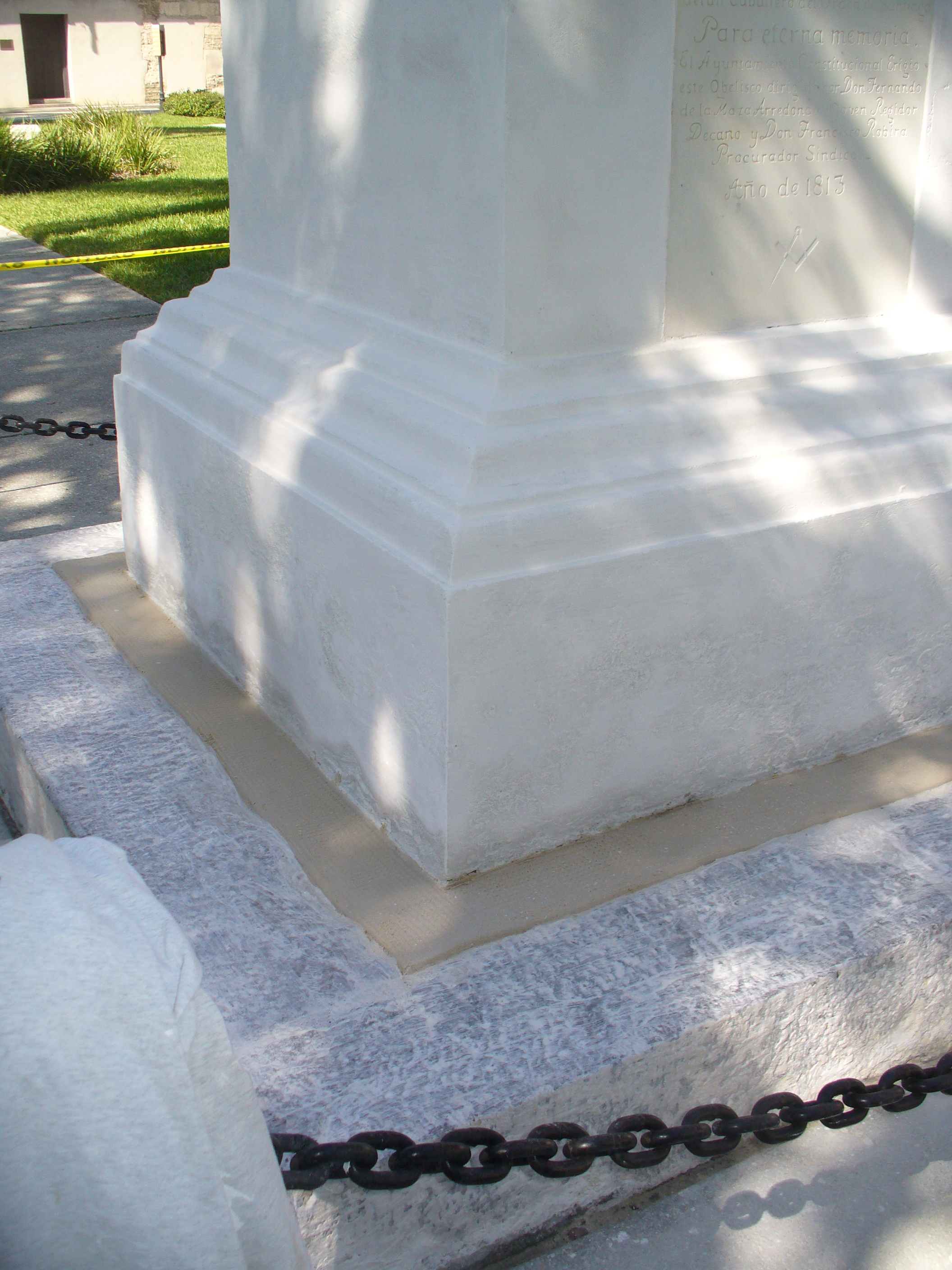
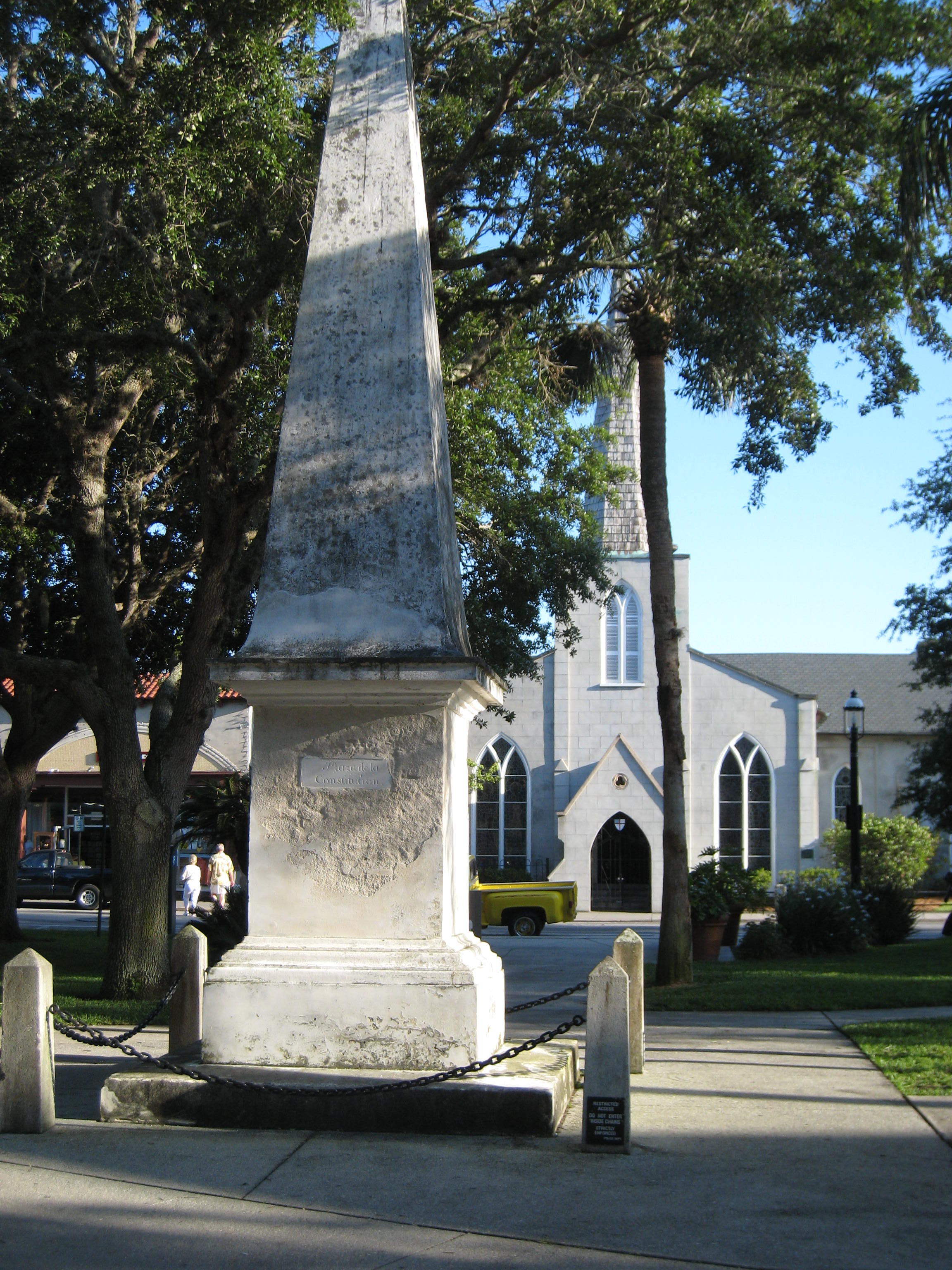
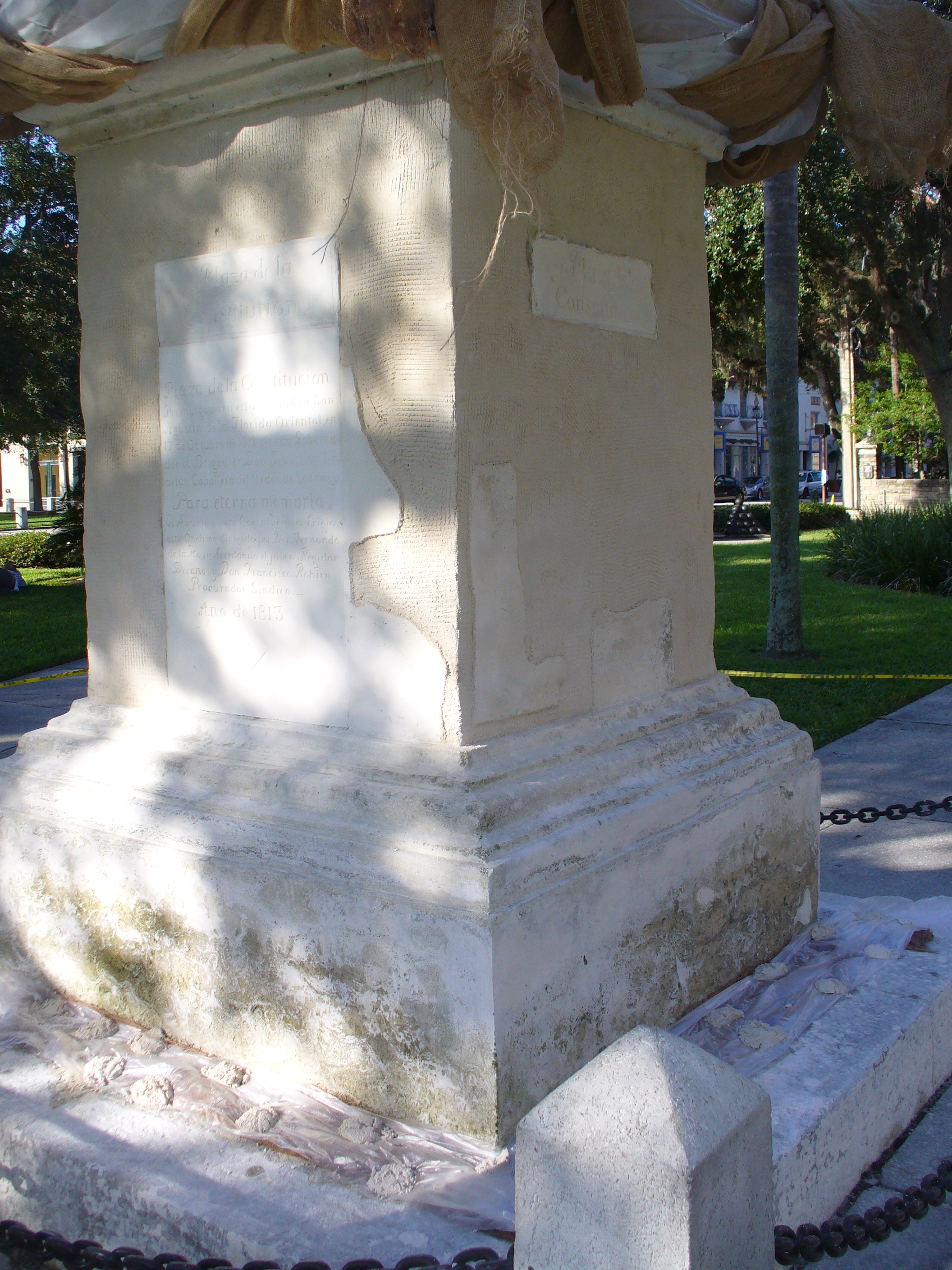
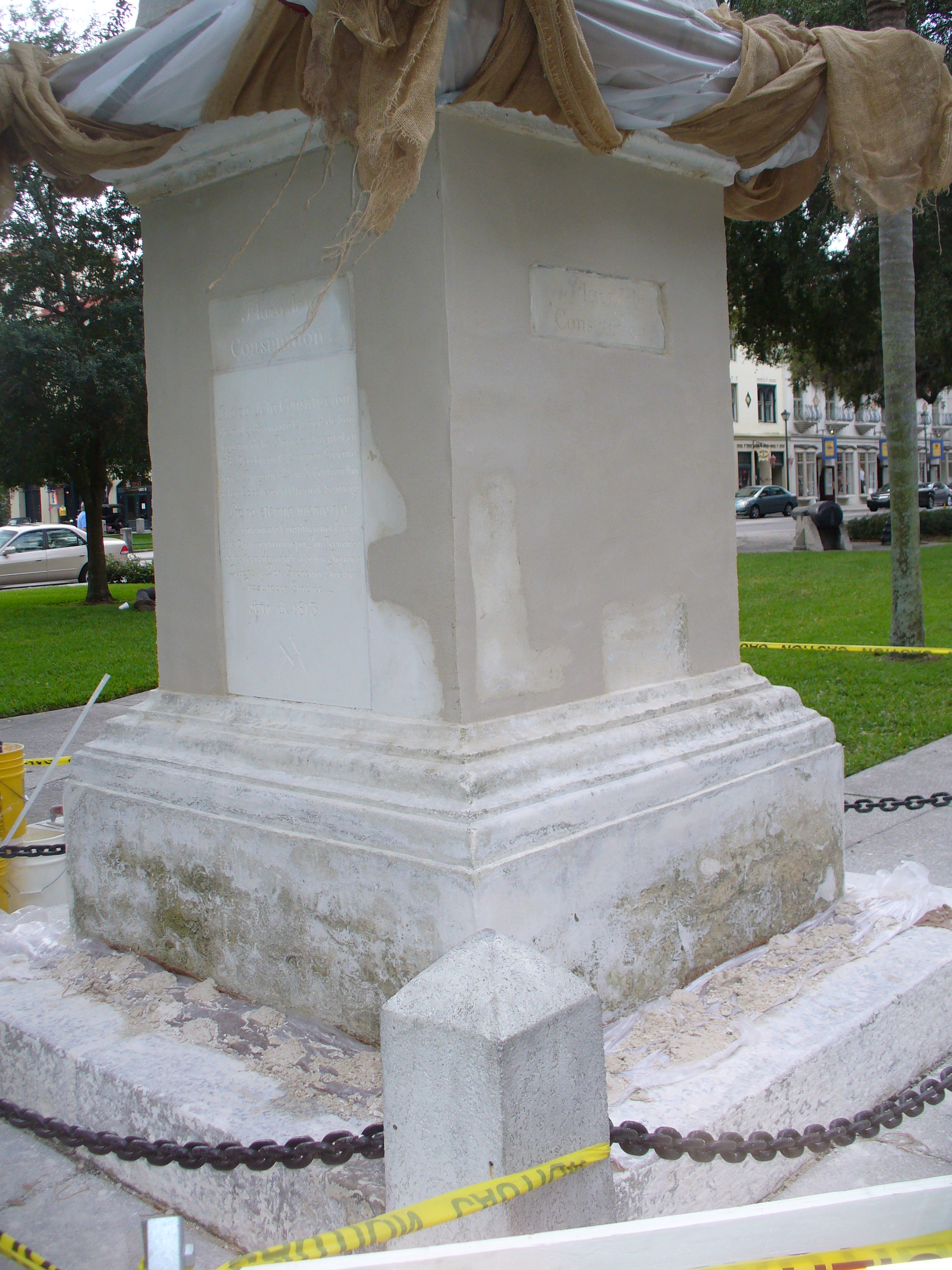
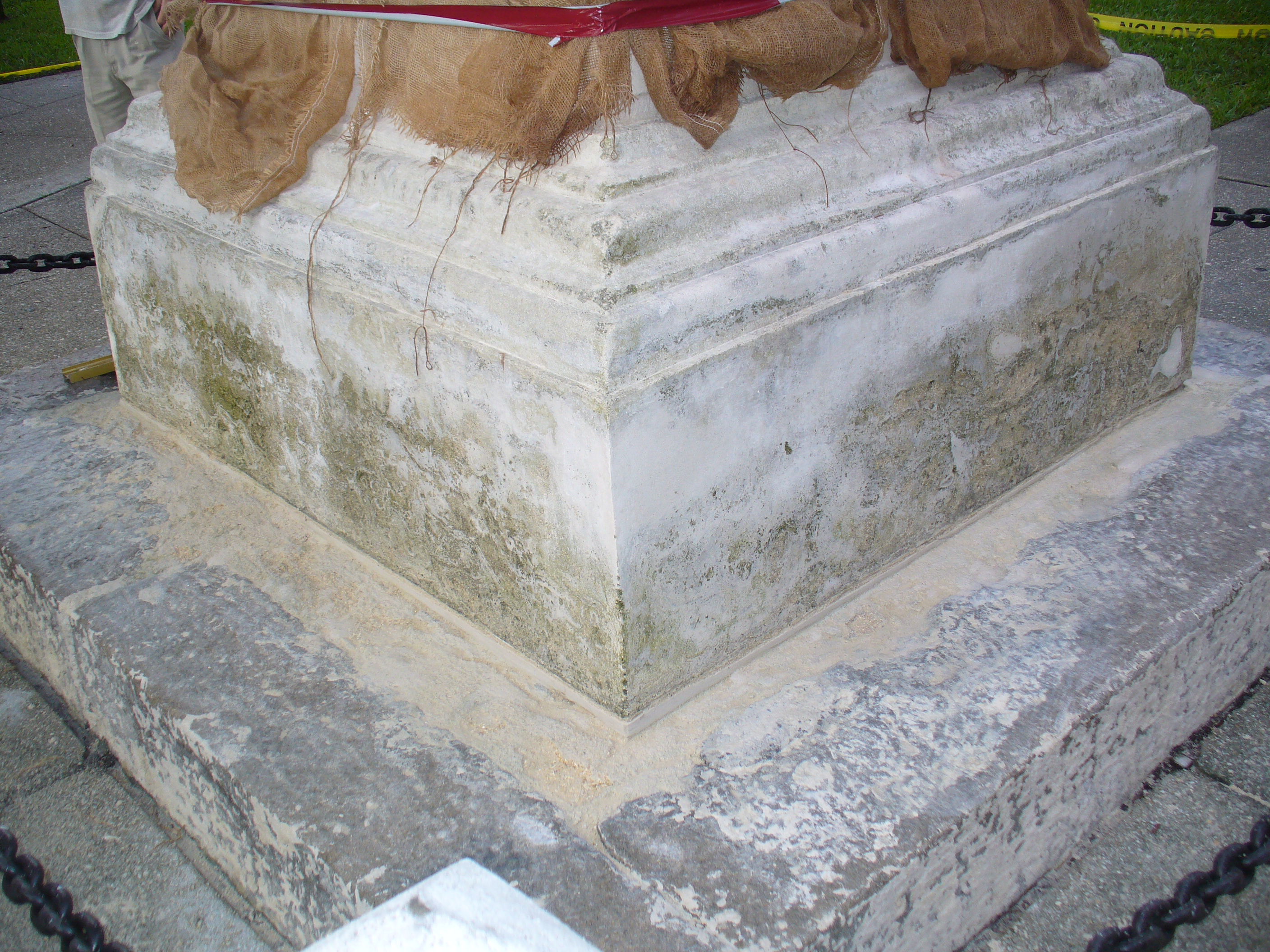
While we were waiting for the first layer of lime plaster to cure (it is wrapped loosely in two layers of wet burlap and plastic), we have to deal with the monument step. The step is a ring of gray/white granite around the base of the original monument. These granite blocks are very similar to if not identical to the granite blocks that I was told were used in the 1856+/- bridge over to the island. These blocks add a protective surround to the monument.

The granite blocks before we started

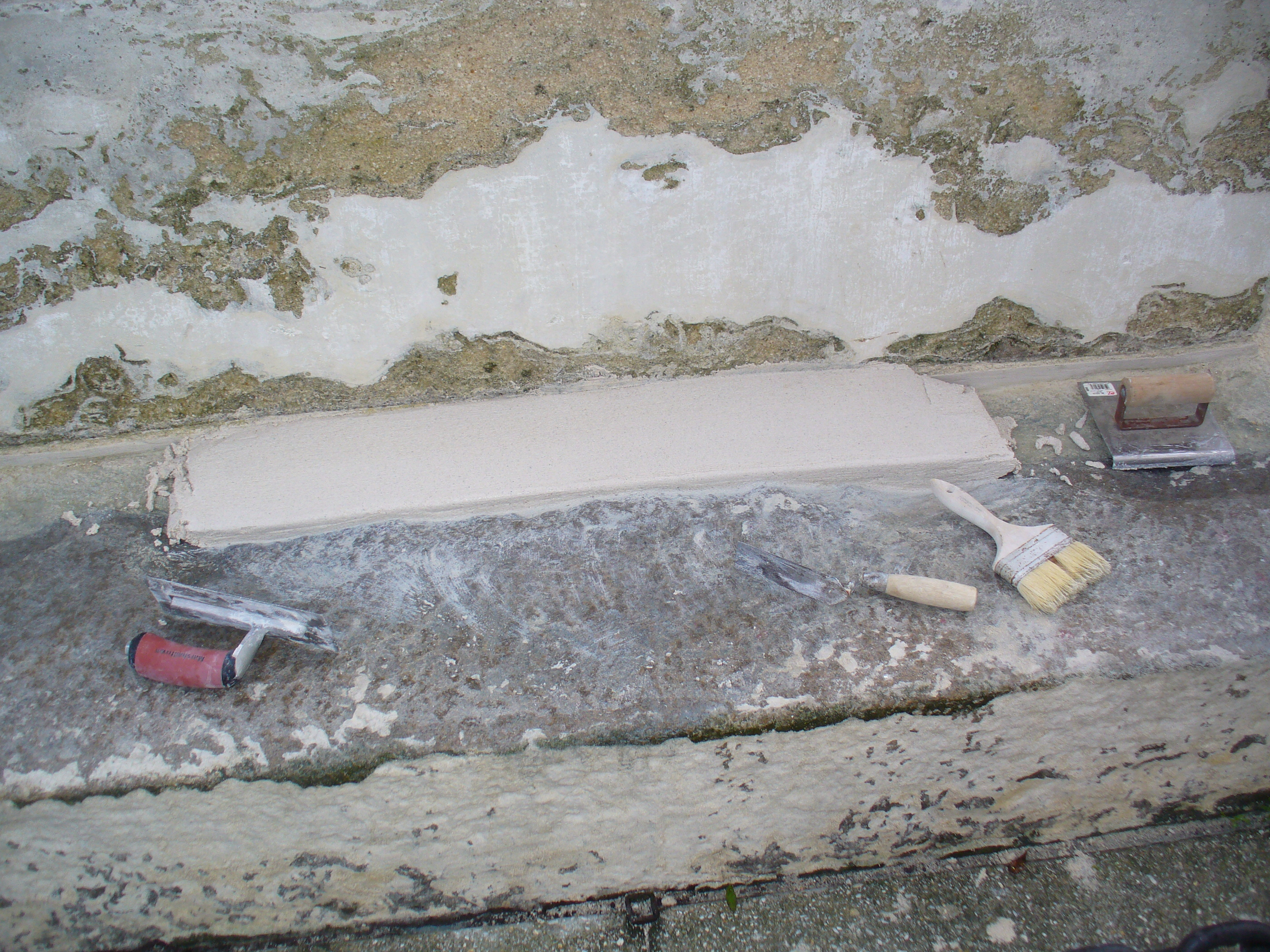
Because this step was not original to the monument we had to design a plaster (render) step to make the transition from the monument to the step.

Our test step

This would take days to fabricate because we were making it from the lime/sand render, building it up at 5/16” at a layer.

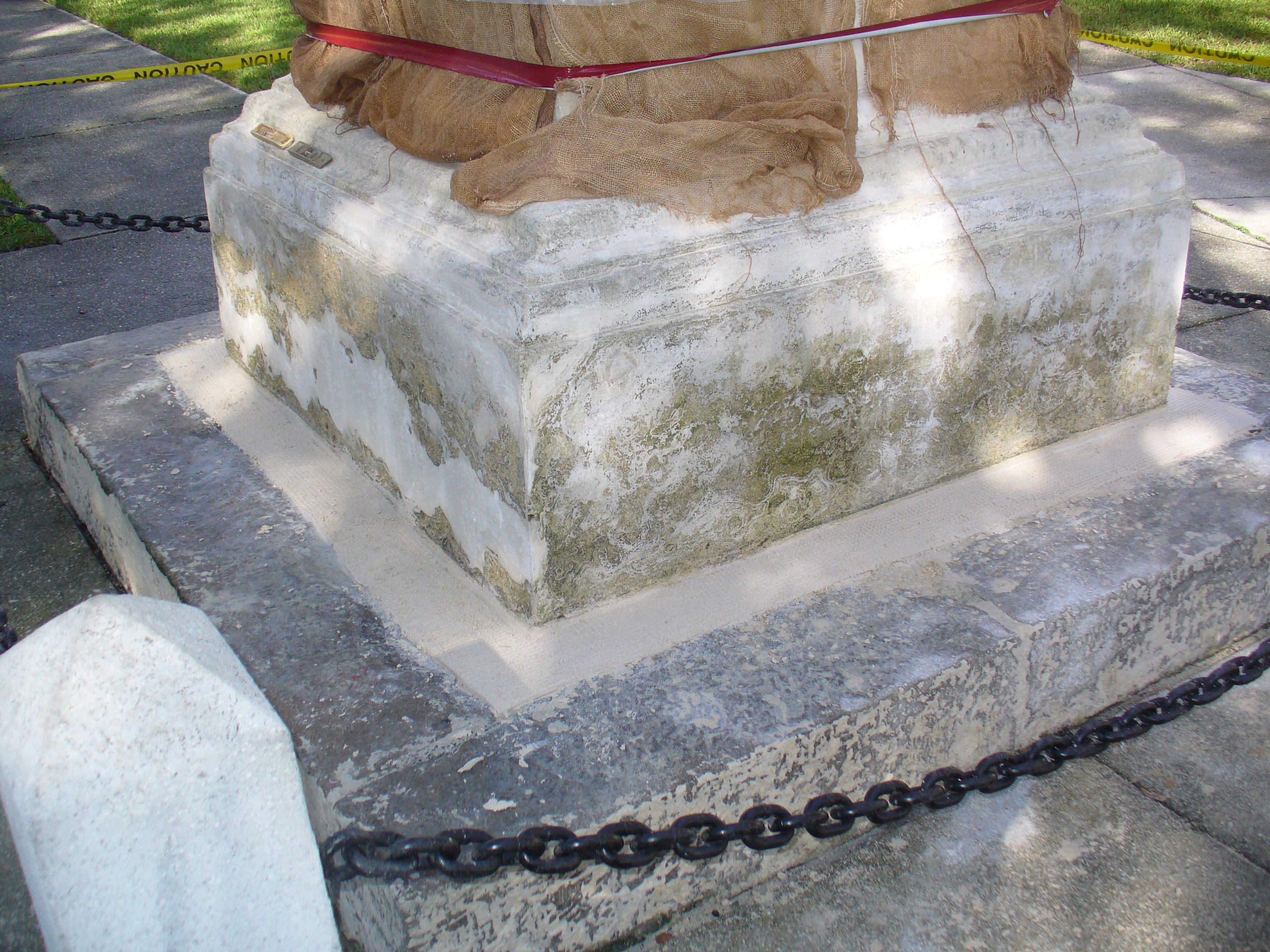
The first layer goes on...

Now we wait for the render to carbonate in preparation for the second layer.


Nathan Boone House Restoration - Video


Plaster Restoration, Monumento de la Constitucion


Monumento de la Constitucion, Day Two

At the end of the day on Wednesday we had all the pieces to restore the render (that’s what we call the first coat on masonry). The mixer, the lime, the sand, the tools and the logistics. I can’t thank the contractor here enough for smoothing the way for this project to go forward. (More on them in another post.)

Due to the fiable nature of the render that was on the monument we removed the it but our actions left the coquina (the stone sub strata) dusty. So we brushed and blew it clean.

Then we wet down the coquina. As it turns out the stone does not have alot of suction. It only has a rather large surface area. So we wet it down and wet it down…

Then it was time to apply the render that we spent the morning making.

Yours truly covering up the coquina!

Being a town square, in a tourist town, in a college town, during motorcycle month you would think that people would stop and ask question. Well they did, WOW. Everyone is pleased that the monument is being restored.

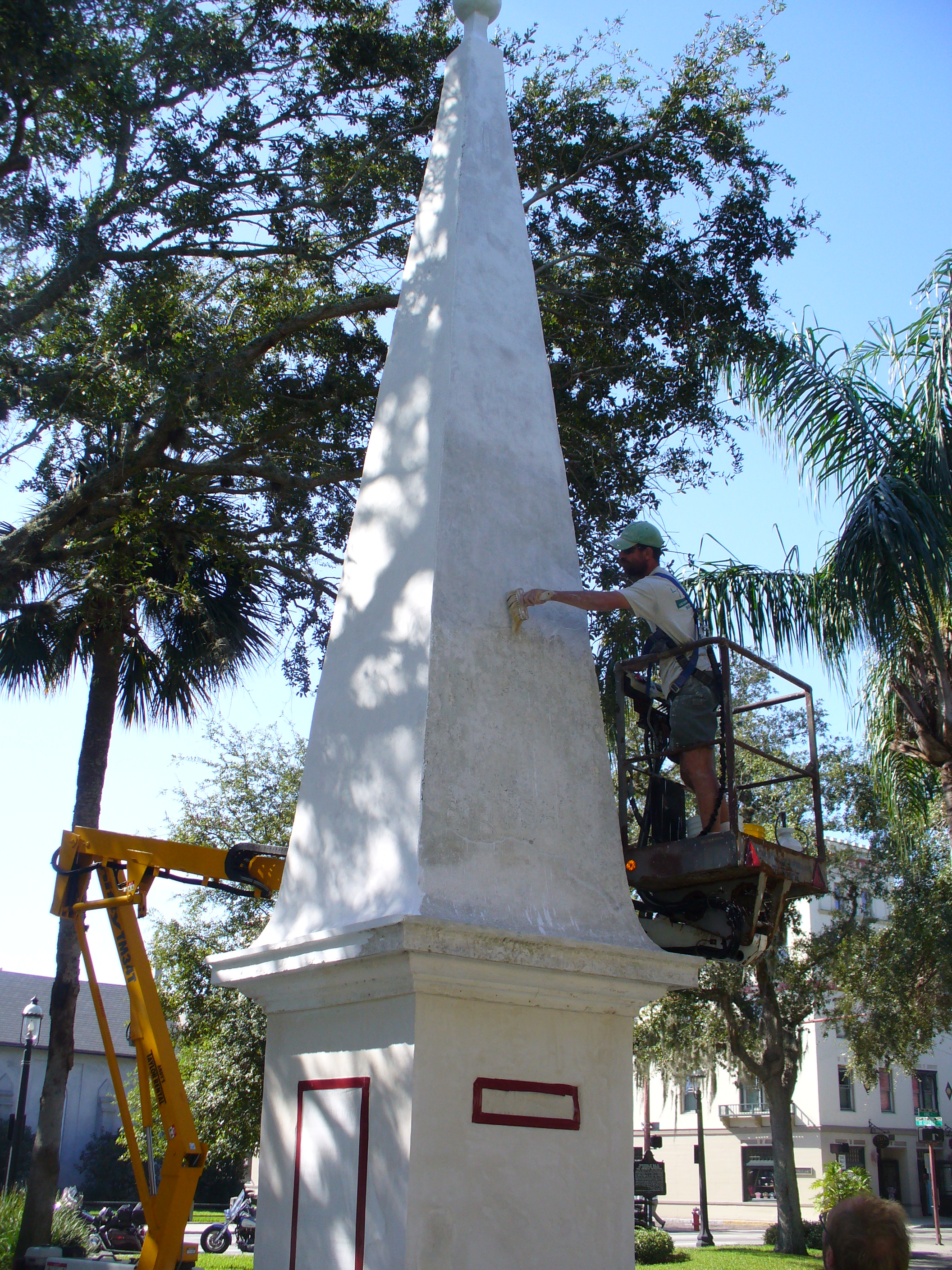
Her we are finishing up the last of the render. Notice that we are working out of the sun, following the shadow around the monument.

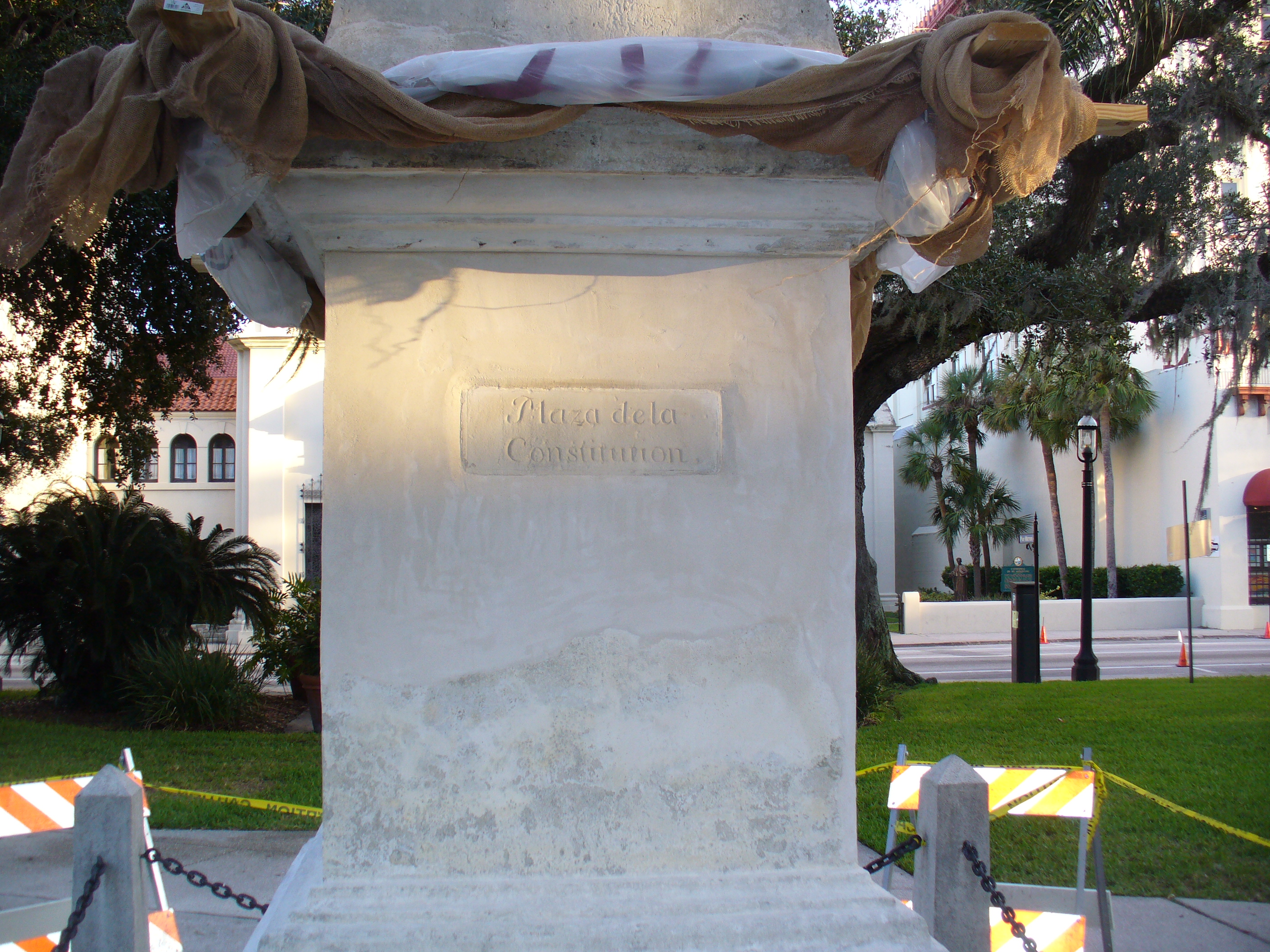
To make sure the render (we used fat lime and sand for the render) did not dry out prior to curing we wrapped the monument up in  two layers of wet burlap covered loosely by sheet plastic. This will prevent the render from drying out from the sun and breeze while providing a damp environment with lots of CO2 for the lime to cure properly.

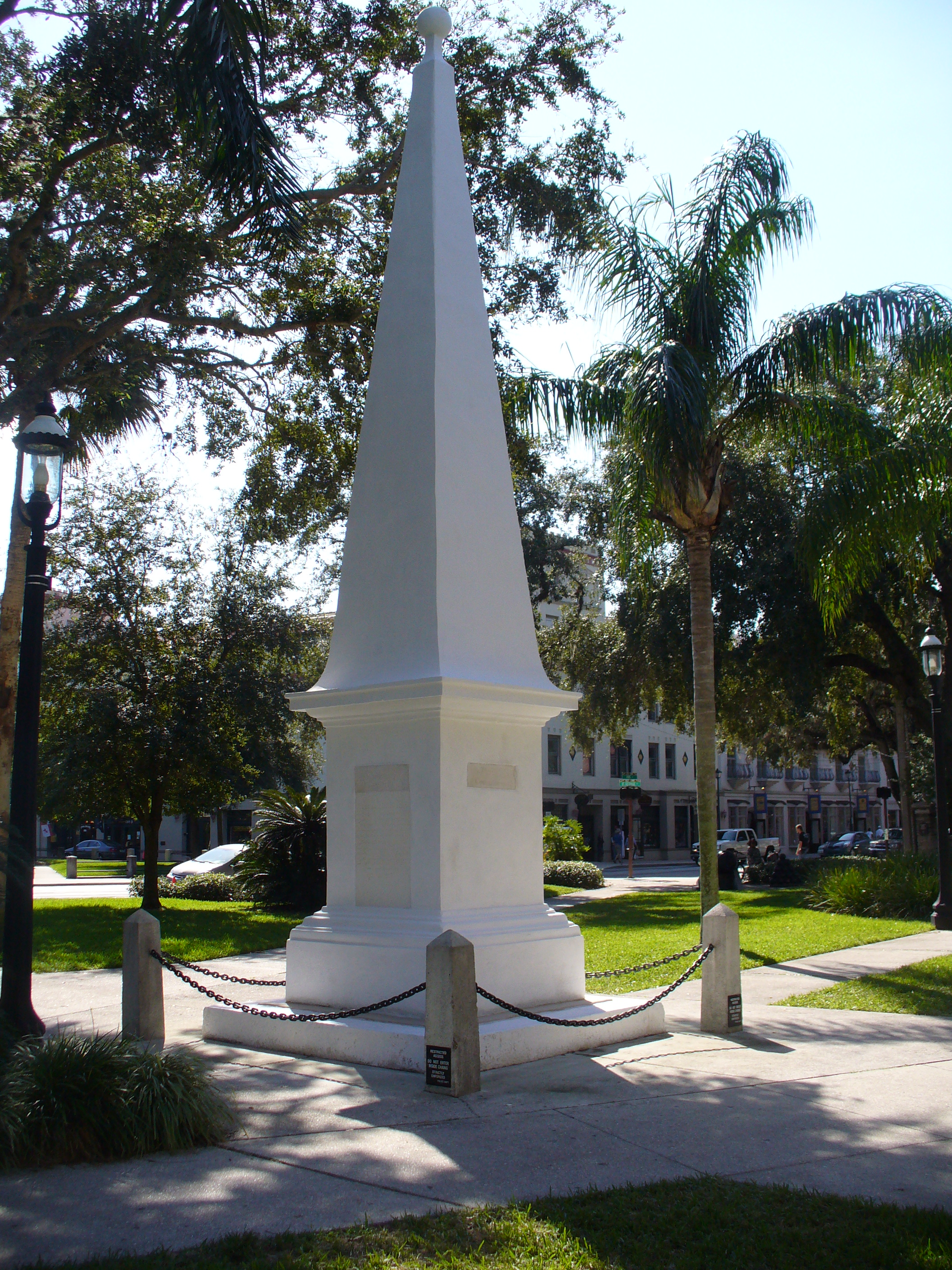
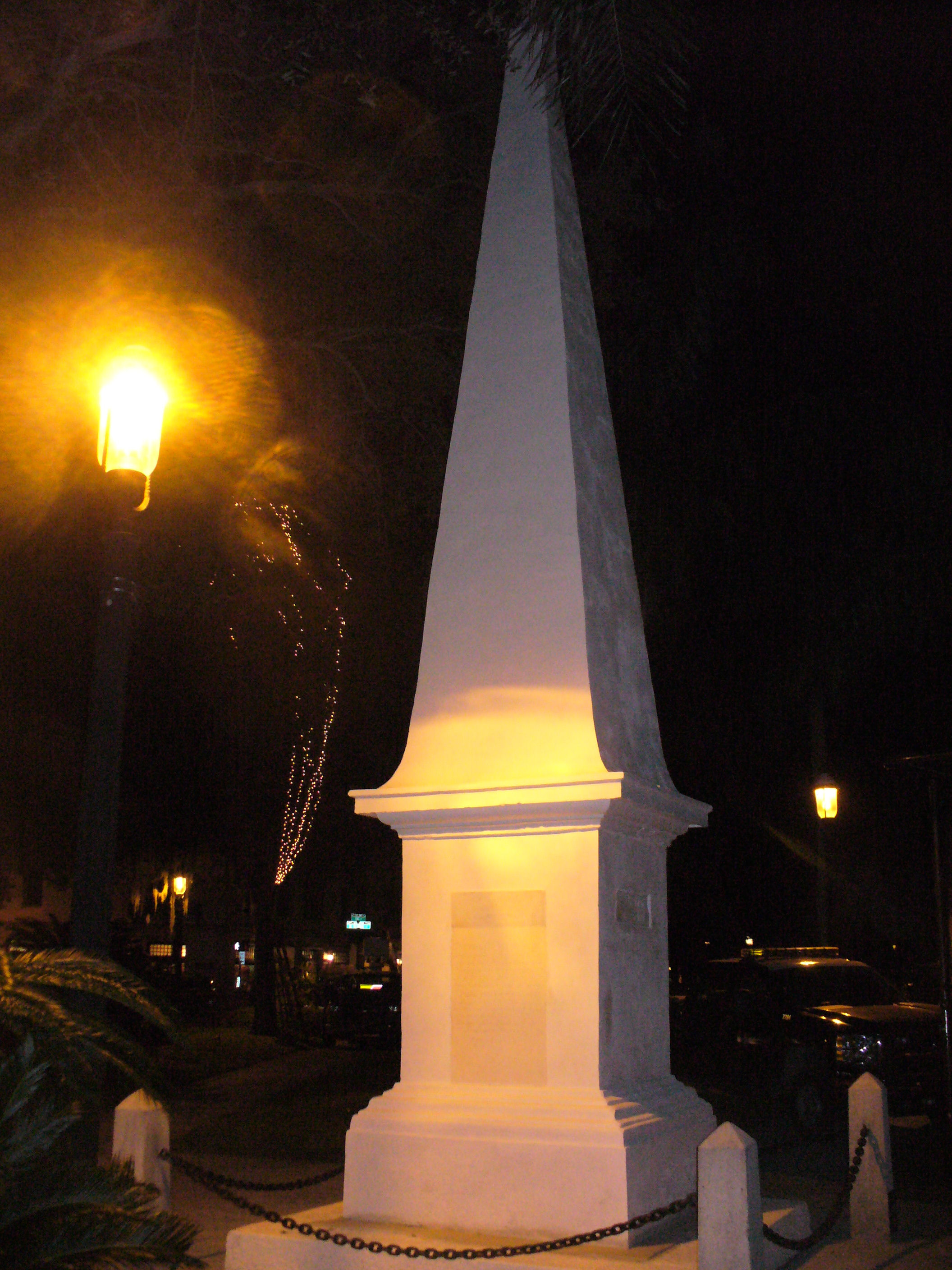
Here’s our little beauty all dressed up and ready for the evening in the plaza.

Check tomorrow to see what fun we are having. Instead of images of grass growing or paint drying we will have exciting images of plaster curing. Hold onto your hats its going to be a wild ride!


Hi From St. Augustine


This is my first post as well as the first from St Augustine! This is a charming north Florida town (city?) just south of Jacksonville. What does St. Augustine have that no other place in the world has? It has the last monument commemorating the second Spanish Republic.

In 1812, with the establishment of the Second Spanish Republic, monuments were erected throughout the Spanish Empire. With the renewal of the Spanish Monarchy in 1814 all of the monumnets were torn down except one. That one is in St Augustine.

This project is restoring the last of its kind, a one and only survivor.

Monumento de la Constitucion

More later about the problems and the solutions we have designed for this important monument.


Plaster blog post


Coming to this page soon will be information on when to use fat limes (almost all the time), when to use NHL’s (very specific circumstances) and why they are used (hint they are not natural just an add on by product of portland production), why portland of yesteryear is not the same portland of today, how to fabricate your own lime plaster (stucco) and why you never use hydrated lime for a building lime.